- Import Old Iphoto Library On Windows 10
- Import Old Iphoto Library On Windows
- Import Old Iphoto Library To Photos
- Import Old Iphoto Library On Mac Catalina
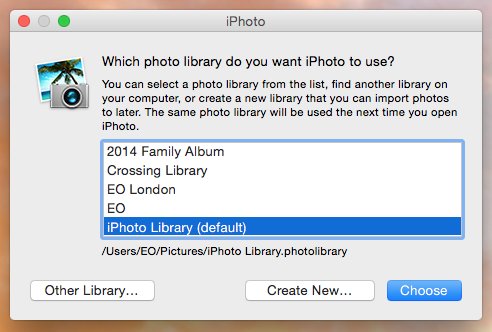
The easiest solution would be to put the old iPhoto database together with the iPhoto Library updater on a USB-stick or an external drive, then hook it up to a Mac that hasn’t been (or can’t be) upgraded to macOS 10.15 Catalina, and run the iPhoto Library updater on that Mac to upgrade your old iPhoto database. The next step in merging iPhoto libraries is to export the photos from the Old library to a separate folder. To do so, open the photos application with Old library selected. Note: You cannot directly export photos from the old library to the new library. First, you have to export photos from the old library to a separate folder. If you see the iPhoto library in the list, simply select it and choose “Choose Library” to open it within Photos app Otherwise, select “Other Library” and navigate to the location of the iPhoto library you wish to import into Photos app, then open it as usual. Before importing I had removed some old pictures to free up space and emptied the old content in iPhoto library trash. Later I realized that I had removed about 20GB of old crucial images stored in my iPhoto library. Importing old iPhoto library to Photos (Yosimite) I have OS X Yosimite, and have the Photos app to manage pictures. Previously like everyone else, I used iPhoto, and have a bunch of family pictures in there.

I get a decent amount of questions on this topic from folks on my Lightroom seminar tour – so much so I thought I’d cover TWO different methods for importing your iPhoto library into Lightroom here today (btw: it works pretty much the same for importing your Apple Aperture library). NOTE:This is for importing Apple’s discontinued iPhoto application – NOT Apple’s current application named ‘Photos’.
STEP ONE: Go under Lightroom’s File menu, under Plug-in Extras, and choose “Import from iPhoto Library” (as shown here). If Import from iPhone Library doesn’t appear in that library, go on to the next step.
STEP TWO: To see if the iPhoto import plug-in is installed, but perhaps it’s not running, go under the File menu and choose Plug-in Manager to bring up window you see here. Look at the list of plug-ins on the left side of the of the window (it will be named “Aperture/iPhoto Importer Plug-in” (as seen here), and make sure it says “Installed and running” right underneath it. If it doesn’t, click the button to the left of its name to activate it.
NOTE: If you don’t see it in the list, you can download it from Adobe at this link. Once you’ve downloaded it (and unzipped it), go to your Desktop [Finder]; hold the Option key then head up under the “Go” menu and now “Library” will be one of the available menu choices (without holding the Options key, the Library is hidden as a choice). When the Library folder appears, go to the Application Support folder, then go inside the Adobe folder; scroll down to the Lightroom folder, and then inside that folder look for a folder named “Module.” That’s where you drag that plug-in you downloaded from Adobe. If you don’t find a Modules folder, you’ll have to make one (just make a new folder; name it “Modules”) and drag that plug-in inside that folder. Now restart Lightroom. If for some reason it doesn’t appear, go to the Plug-in Manager and turn it on.
STEP THREE: If you have the plug-in already installed and running (which is probably the case), or if you just installed it, and then went under the File menu, under Plug-in Extras and chose ‘Import from iPhoto Aperture’), you’ll see the window above. It should automatically find your iPhoto Library and you’ll see it listed at the top, next to iPhoto Library. If for some reason it doesn’t see it – no worries – just click the Select button on the far right and point Lightroom to where you’ve stored your iPhoto Library on your computer (or on your external hard drive). All you have to do at this point is click the Import button at the bottom right.
ABOVE: You’ll wait a minute or two while Lightroom checks your iPhoto library and see if it’s OK for import.
STEP FOUR: Depending on how many images were in your iPhoto library, it’s going to take anywhere from a long time, to a really, really long time to import those images. It is NOT a fast process, and it’s a good idea to go to dinner and movie during this process, and then when you get back, you’ll have still time to watch a couple of episodes of The Good Doctor before it’s done.
ABOVE: The imported images from your iPhoto Library appear as their own Collection Set in your Collections panel (as shown here). I didn’t have time for dinner and movie, so I stopped the import after a while, and at that, it only imported 38 images. There’s a ‘Done’ button you can click if you decide to bail out on the import process). You’ll see a dialog appear after the import process that lets you know that any face-tags that were applied in iPhoto have been converted to regular keywords within a keyword category named “iPhoto Features” in Lightroom’s Keyword list panel, so at least it keeps your work there intact.
THE MANUAL METHOD
The advantage of using the plug-in to import your images is that it tries to keep your iPhoto albums, edits and your organization there as intact as it can. If you don’t want to use Lightroom’s automatic iPhoto importer plug-in, you can do it manually, but you’ll lose that album organization, keywords and edits and stuff, but at least you’ll have your original images. Here’s how to move them manually:
STEP ONE: Go to your iPhoto Library file; right-click directly on that file and from the pop-up menu that appears, choose ‘Show Package Contents’ (as shown above).

STEP TWO: Inside that folder that appears, you’ll see a folder named “Masters.” If you just drag that folder onto the Lightroom icon, it will import the thumbnails, but your originals will still be buried inside your iPhoto library. That’s why you’ll want to duplicate that Masters folder – right-click on it and choose “Duplicate” as shown above), and now drag that duplicate folder out of that iPhoto folder, and drag it to wherever your store your Lightroom photos (hopefully on an external hard drive). OK, we’ve got our photos out of iPhoto – now let’s get ’em in Lightroom by dragging that folder onto the Lightroom icon in your dock, and it’ll bring all those images in (as long as you click the “Included Subfolders” button in the center of the Import window.
Hope you found that helpful. 🙂 Here’s wishing you an awesome start to your week!
Best,

-Scott
P.S. I got my first printed copy of my new book, “The Flash Book” last Friday and the books are on their way to bookstores and Amazon’s warehouse. Want to get your printed copy first? Here’s the link.
Why You Shouldn’t Add Keywords in Lightroom ...
Setting New Defaults For Lightroom Classic’s Adjustment ...
Import Old Iphoto Library On Windows 10
Related Posts
Having numerous libraries on an iPhoto application is quite normal. Creating libraries might organize your photos but, having more than suggested libraries can be confusing. Additionally, it can also be annoying to manually select an iPhoto library every time you open a Photos app on your Mac. This is why many users are searching for ways to merge the iPhoto libraries.
Another scenario where a user wants to export the photos from the old Aperture library to the latest Photos application. Regardless of the requirement or the scenario, the process of merging the iPhoto library is going to stay the same. Please refer to the content below to know the Apple suggested methods to merge iPhoto libraries.
Disclaimer: While merging the iPhoto libraries there is a possibility of losing photos. So, be very cautious while merging.
Note - In case if your iPhoto library is crashing while following the procedure mentioned below, learn how to repair iPhoto crashing
How to Combine iPhoto Libraries?
There are a couple of methods to combine the iPhoto libraries.
- Merge iPhoto libraries by importing and exporting the photos
- Merging the iPhoto libraries using Open Package Content
How to Merge iPhoto Libraries Using Export and Import Method?
If you have referred to Apple’s support page for the Exporting and Importing the photos, it is a little intimidating and confusing. So, here is a detailed explanation of every single step to merge two different iPhoto libraries.
Before starting the iPhoto merging process, be a little cautious, because there are numerous steps, you might get confused and accidentally delete one or two photos. If you have deleted you can recover the deleted photos on Mac.
Choose iPhoto Library
The first step of combining the iPhoto library is to select the library you want to merge. To keep things simple, let’s consider the libraries you want to merge to be Old Library and New Library. We want to merge Old Library to New Library.
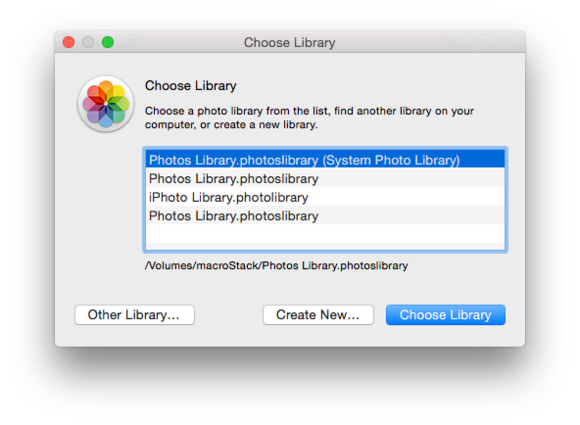
Firstly you have to select the Old Library. To open the Old Library, hold the options key while opening the Photos application. Which will open the Choose Library dialogue box. Now select the Old Library (the library you want to merge with) and click on choose library option.
Once the library is selected, open the Photos application. The next stage is to export photos, which are mentioned below.
Export the Photos from Old Library
The next step in merging iPhoto libraries is to export the photos from the Old library to a separate folder. To do so, open the photos application with Old library selected.
Note: You cannot directly export photos from the old library to the new library. First, you have to export photos from the old library to a separate folder. Later import the photos from the folder to the new library.
Select the desired photos from Old Library to merge with New Library and go to the File menu, a select Export option where you will see two more options
- Export Photo: If you have edited the photos or made any changes to the photos you can select this option
- Export Unmodified Original for Photos: Selecting this option will discard any changes you have made such as special title or edits you have done to a photo. Also selecting this option will give you a special dialogue box with numerous options that let you change the format of the exported photos. All these options are self-explanatory.
Click on Export. Since Apple did not provide feasibility to directly export photos from one library to another, first you have to export the photos to a folder. Later you can import photos from that folder to a New Library.
So, after clicking on the export option create a folder on the desired location with the recognizable folder name, and for one last time click on the Export option.
Note: It is suggested to create a folder on the desktop so that it is easy to find. If you lost any photos while exporting photos, you can use Remo Photo recovery software.
Importing the Photos to New Library
The final step is to import the photos to New library. To do that you have to select the New Library. Similarly, hold the options button while opening the Photos application and choose the New Library.
Once the New Library is selected, go to File in the menu bar and select the Import option. Which will open the import dialogue box, from the import dialogue box go to Desktop or the location where you have created a folder with exported photos. Select the folder with exported photos and click on Import to successfully merge Old iPhoto Library with New Library.
Note: Suppose you want to share photos from your iPhone to the non-apple devices, then read this article to learn to Share iCloud photos with non-apple devices easily.
Merge iPhoto Library using Open Package Content Method
Before going through this method, there is a small concept you have to clear. iPhoto library is a package of various different folders. A typical iPhoto library package consists of the following folders
- DataBase
- External
- Originals
- Private
- Resource
Import Old Iphoto Library On Windows
This is how Apple organizes photos in the iPhoto library. To merge different iPhoto Libraries, you don’t need detailed information about those folders so we shall just skip that part. Now moving on to merging two iPhoto libraries here is how to combine iPhoto libraries
Import Old Iphoto Library To Photos
- Open Finder and from left sidebar select Pictures tab
- Generally, the pictures tab will contain all the libraries available on your Mac
- As discussed earlier, consider the same New and Old iPhoto Library concept
- Right-click on the old Library and from the displayed options select “Open Package Content”
- This will reveal above aforementioned folders.
- Now go back to the pictures tab and Open the New iPhoto Library. Just double click on the New Library to open it
- All you have to do to merge the Old and New Library is to just drag and drop the Originals folder from the Old Photos library into the currently opened New Library.
- This will import the photos from Old library to New iPhoto Library.
Can I merge two photo libraries on Mac using iCloud?
Yes, you can merge two Photo Libraries using iCloud yet, it is not suggested. Because firstly it is not merging, it is just uploading photos from two different iPhoto libraries onto the iCloud. Secondly, considering the cost of iCloud space, it is not practical to subscribe to iCloud just to merge iPhoto libraries.
Import Old Iphoto Library On Mac Catalina
Obviously, it has its own perks. For example, there is no fear of data loss, even though you might delete a photo you can recover that deleted photo from iCloud.